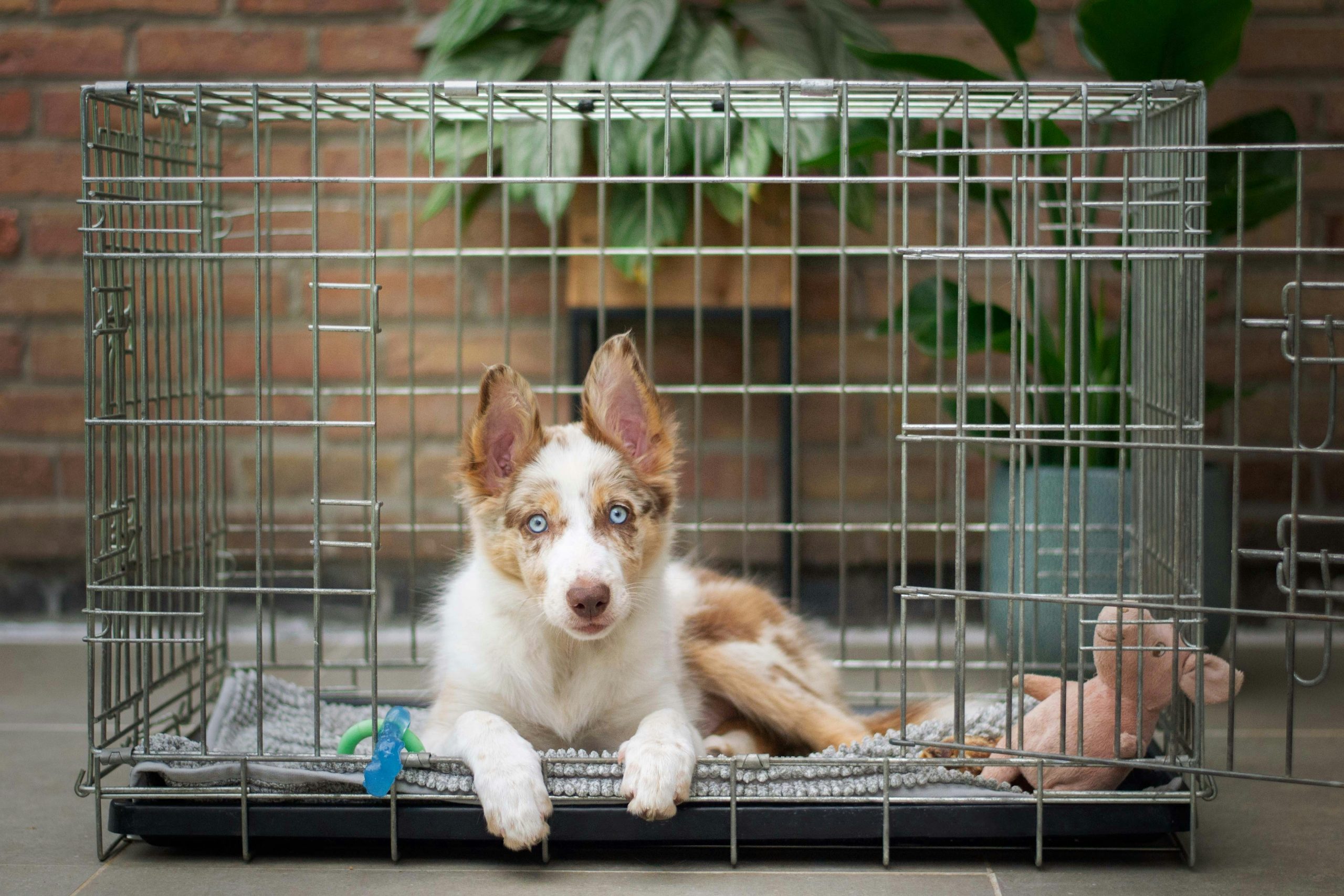
One of the most useful yet commonly misunderstood methods used by many dog owners is crate training. It helps establish a regular routine in the home. In Cedar Hills where the household dog may be an integral part of the family the use of a dog crate is beneficial as it helps in defining household rules, reduces household stress and plays a part in developing long term good dog behavior.
The use of crates should not be a method of confinement or a punishment simply for the owner’s convenience. Correctly employed, these offer clarity and a certain level of predictability. Canines are inclined to look for secure locations. A well-integrated household contains a calm space rather than an area of conflict.
Why crate training matters in Cedar Hills homes
Dog anxiety is a frequent issue, often stemming from overstimulation or the anxiety of being left alone. They can manifest as destructive tendencies, chronic barking or restlessness.
When left to their own devices, many dogs will destroy a room through separation anxiety. Crate training is an excellent way to solve this problem. Crate training works by providing the dog with a place to settle, essentially a place to call its own. In Cedar Hills where there are homes that have children, occasional visitors and varying schedules, it is especially vital to know how to multitask.
By using structured crate training you can help your dog understand when it’s time to play and when it’s time to rest. When household rules and expectations are consistent, dogs relax more easily and display improved behaviour.
Choosing the right crate and setup
It is the way the object is used, rather than the object itself, which is most important. It must be of a size that permits the dog to stand, turn and lie down in it comfortably. Crates that are larger than necessary can often reduce the efficiency of this delivery system.
Placement also plays a role. It should be positioned in a quiet area of the home, but also easily accessible. In crowded areas the dog may become over-stimulated, but solitude boosts anxiety in the dog.
In any branding program, consistency is vital. The packaging should constantly project the same image. Unpredictable usage can result in individuals objecting and also getting confused.
Setting expectations from day one
Before beginning crate training it is helpful to establish some house rules. Household pets should be kept on a set routine and be allowed in and out on their owner’s terms. People should have a structured process when entering or leaving a care facility.
While positive reinforcement can act as a powerful tool to assist in modifying such behavior, it should not be used alone. Responsibility towards dogs has to be taken. Crate training works best when dogs are introduced to it gradually and are not forced to enter it if they resist. Remaining calm and composed is helpful in overcoming resistance to crate training. Crate avoidance should be minimized by owners as it may encourage unwanted behavior from the dog. The crate must be seen as a safe, happy area by the dog and should not be used as a form of punishment.
In Canine by Design, balance between function and cosmetics is given top priority. Positive reinforcement training methods can make it easier for owners to crate their dogs without stressing them out, which in turn makes the process of crate training simpler and less problematic.
Avoiding common crate training mistakes
One of the biggest mistakes is inconsistency. The dog gets confused when being crated at times but allowed out of the crate at others.
A common mistake developers make is when they introduce a crate which isn’t used in the project. Crates can support structure, but must not displace training. While dogs are at home, they still need their physical and mental stimulation.
When crate training a puppy, it is best to avoid placing other dogs in the crate with the puppy. Also, the training should not be conducted in a noisy household or with the puppy in a busy area of the home. Trained by Design eschew group classes, so that dogs can be trained to stay in a crate calmly and with attention.
How crate training supports overall obedience
crate training is actually part of a larger set of related skills. The dog is capable of mastering household behavior, including impulse control and walking on a leash.
Canines that have learned to calm themselves in a crate tend to behave more well when outside it. Pupils learn the importance of self-discipline and control.
For families living in Cedar Hills and the surrounding communities of Highland, Alpine and American Fork, crate training offers a way to help their dogs cope with the household mayhem without becoming over stressed.
Owner involvement makes the difference
The success of crate training relies heavily on the commitment of the owner. Setting clear goals, having a consistent pace and a definite schedule, and establishing achievable objectives reduces the likelihood of setbacks.
Canine by Design places a priority on educating the owner throughout the training process. By showing the dog owner how to use the crate appropriately, owners can make sure that training continues at home.
This method assists in preventing the animals behaving in an undesirable manner including such as refusing to enter their crate or whining.
Long term benefits of proper crate training
Well-socialized and properly crate-trained dogs are usually more relaxed and more confident than those that are not. People with healthy boundaries understand when a boundary has been crossed. They also feel secure in their established boundaries.
Crate training helps with household moves, visits to the vet and travel, since your dog will be safely confined. This benefit is not confined to puppies alone.
Residents of expanding areas such as Cedar Hills and Lehi find it particularly advantageous to own a calm dog.
Canine by Design Can Help
When residing in the area of Cedar Hills, UT and wanting structured training methods, Canine by Design teaches consistent canine training methods. Their training programs do not include interaction with other dogs or daycare. Neither do they involve boarding nor the promotion of excited responses.
Consider consulting Canine by Design to learn how crate training can contribute to better behavior and a more harmonious home for you and your dog.